
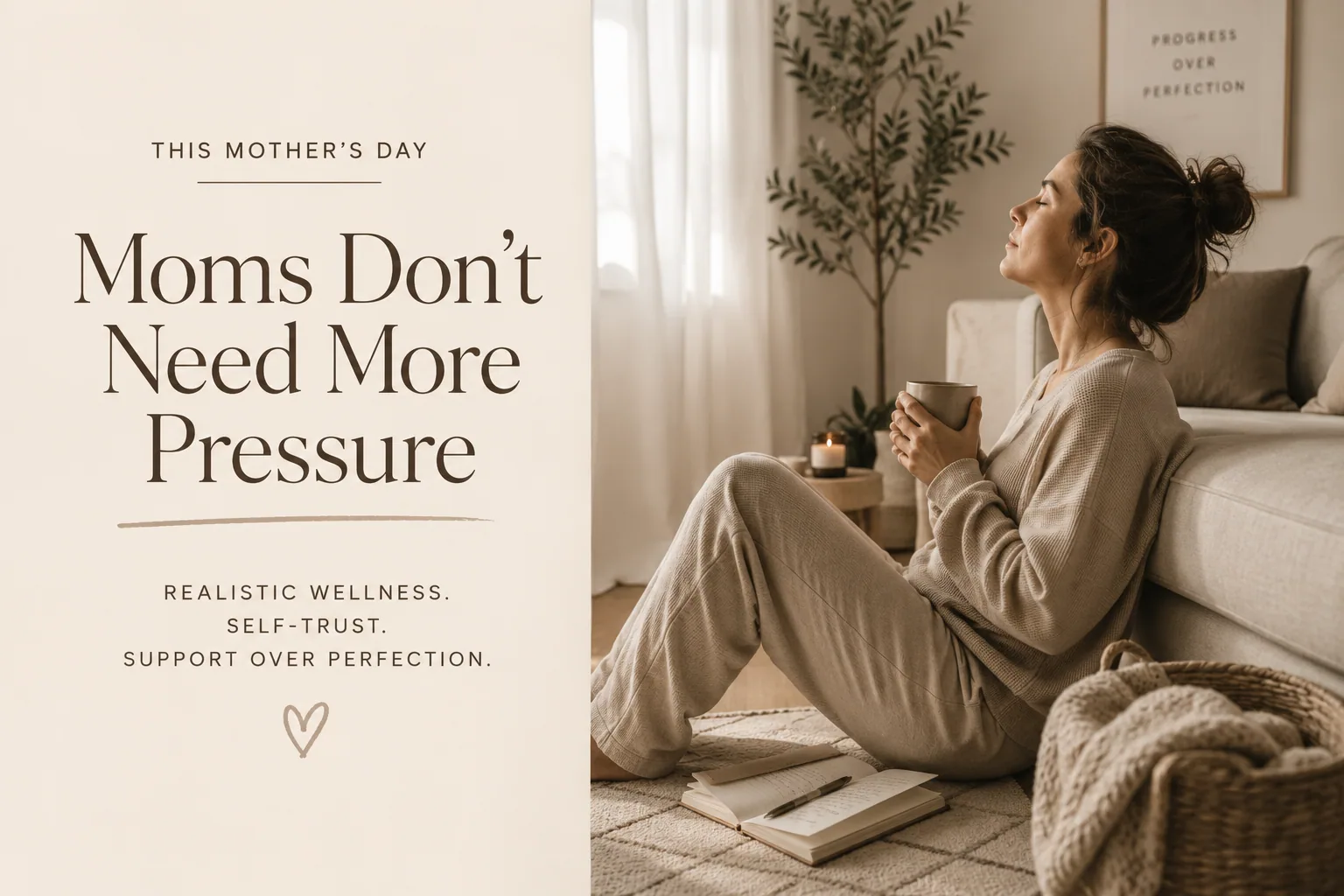
Moms Don’t Need More Pressure
This Mother's Day, let's prioritize realistic wellness and self-trust over societal pressures and perfection.
The reality is that moms don’t need more pressure. They need to feel supported and validated in their journey. The expectation to look perfect, to have it all together, and to be the ideal parent can create a toxic environment where feelings of guilt and inadequacy thrive. Mothers are often overwhelmed, exhausted, and overstimulated, leaving little room for self-care and nurturing. This conversation is about liberating ourselves from the constant pressure to perform and instead, embracing a more compassionate approach to wellness and self-care.
The Weight of Societal Expectations
Motherhood is constantly marketed to us in extremes.
Be present. But productive.
Stay soft. But bounce back fast.
Take care of your kids. But also meal prep, work out, heal your hormones, keep the house clean, stay attractive, regulate your nervous system, drink enough water, and somehow enjoy every second of it.
It’s too much.
And even when we know those expectations are unrealistic, they still settle into the background like static.
You start believing:
- if you were more organized, you’d finally stay consistent
- if you had more discipline, this wouldn’t feel so hard
- if you could just “get it together,” everything would click
But most of the time, the issue isn’t laziness.
It’s overload.
You’re carrying too much while being told you should make it look effortless.
That’s not a personal failure. That’s pressure.
And pressure changes the way your body responds.
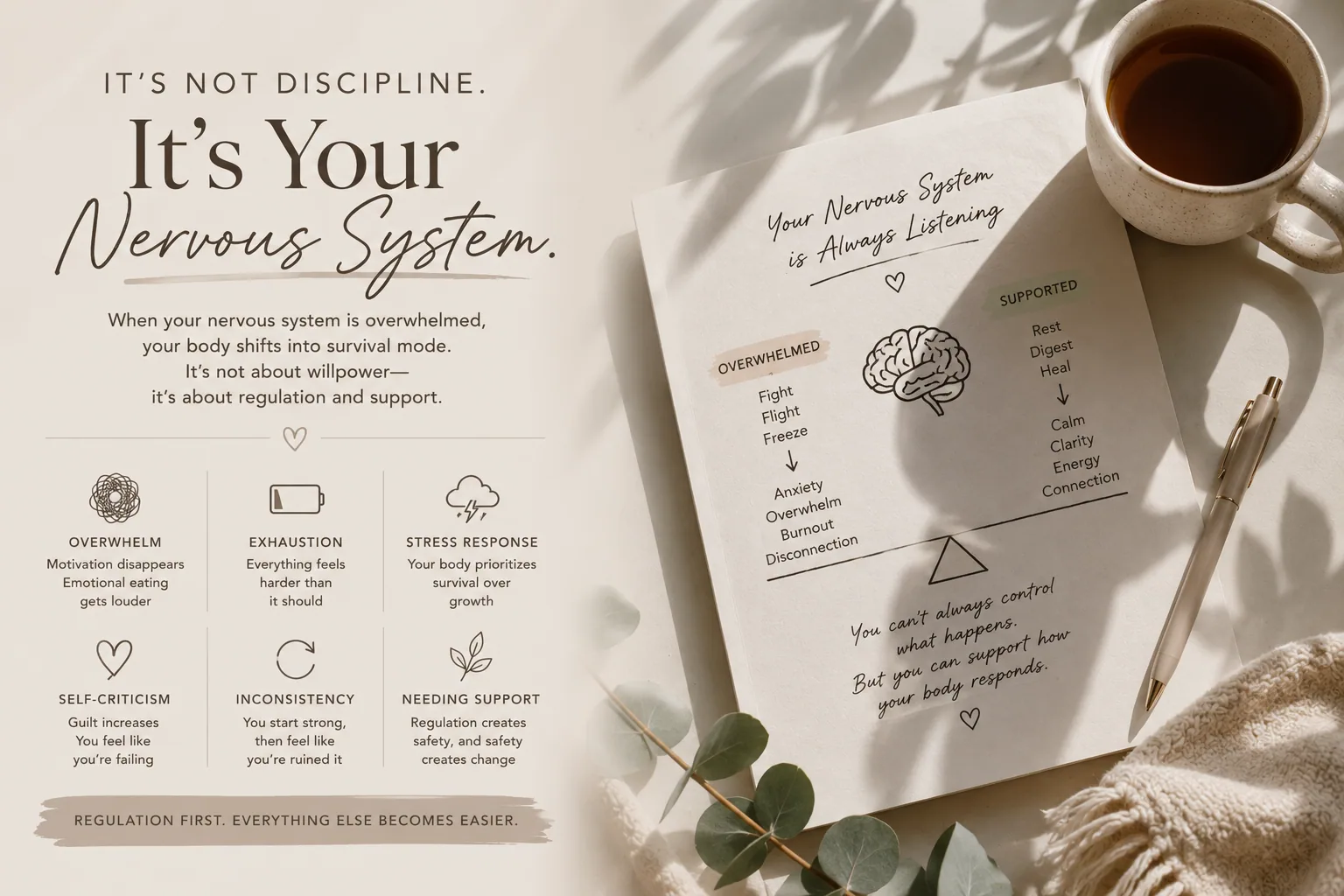
It’s Not Discipline. It’s Your Nervous System.
When your nervous system is overwhelmed, your body stops prioritizing growth and starts prioritizing survival.
That changes everything.
Suddenly:
- workouts feel impossible to start
- emotional eating gets louder
- motivation disappears
- consistency feels fragile
- rest feels guilty
- and even small tasks feel heavy
Not because you don’t care.
Because your body is trying to protect you.
A stressed nervous system will always choose:
- comfort
- relief
- predictability
- recovery
before it chooses discipline.
That’s why so many moms swing between: “I’m all in.” and “I can’t do this today.”
It’s not inconsistency.
It’s exhaustion.
And when you understand that, the conversation shifts.
Instead of asking: “What’s wrong with me?”
you start asking: “What kind of support do I actually need right now?”
That question changes everything.
Healing Your Relationship With Food
Food becomes emotionally complicated when your body stops feeling safe.
Because unlike other coping mechanisms, you can’t completely walk away from food.
You still have to face it:
- during stressful days
- between errands
- while standing over the sink
- while feeding your kids
- while running on no sleep
over and over again.
Which means healing your relationship with food usually isn’t about becoming stricter.
It’s about becoming more aware.
Learning:
- the difference between hunger and overwhelm
- the difference between nourishment and punishment
- the difference between structure and control
Healing doesn’t look like perfection.
It looks like:
- pausing before reacting
- eating without guilt
- rebuilding trust with yourself
- stopping the cycle of “starting over Monday”
- creating routines that feel sustainable instead of extreme
You can’t shame yourself into peace.
But you can build a relationship with food that feels calmer, safer, and more supportive over time.
Movement That Feels Supportive
Movement was never supposed to feel like punishment for being human.
But for a lot of moms, fitness slowly became tied to:
- guilt
- pressure
- comparison
- proving something
- “making up for” food
- forcing consistency no matter what
That’s not wellness.
That’s survival mode wearing activewear.
Some days strength training is supportive.
Some days it’s:
- a walk outside
- stretching on the bedroom floor
- ten quiet minutes before the house wakes up
- dancing in the kitchen with your kids
That still counts.
Because movement should help you reconnect with your body… not disconnect from it even more.
And honestly?
One imperfect workout you actually recover from will always matter more than a perfect routine you burn out trying to maintain.
Consistency isn’t built through punishment.
It’s built through safety.
Rebuilding Self-Trust
Self-trust doesn’t come from doing everything perfectly.
It comes from learning that you can support yourself consistently… even imperfectly.
That might mean:
- following through on smaller promises
- resting before burnout
- eating enough
- asking for help
- choosing flexibility over extremes
- speaking to yourself with less cruelty
Little by little, your body starts learning: “I don’t have to fight myself all the time anymore.”
And that matters more than most people realize.
Because when your nervous system finally feels supported, wellness stops feeling like a constant battle.
It starts feeling sustainable.
Maybe The Goal Isn’t More Discipline
This Mother’s Day, maybe the goal isn’t becoming a “better” version of yourself.
Maybe the goal is learning how to support the version of you that already exists.
The tired version. The overwhelmed version. The trying-her-best version.
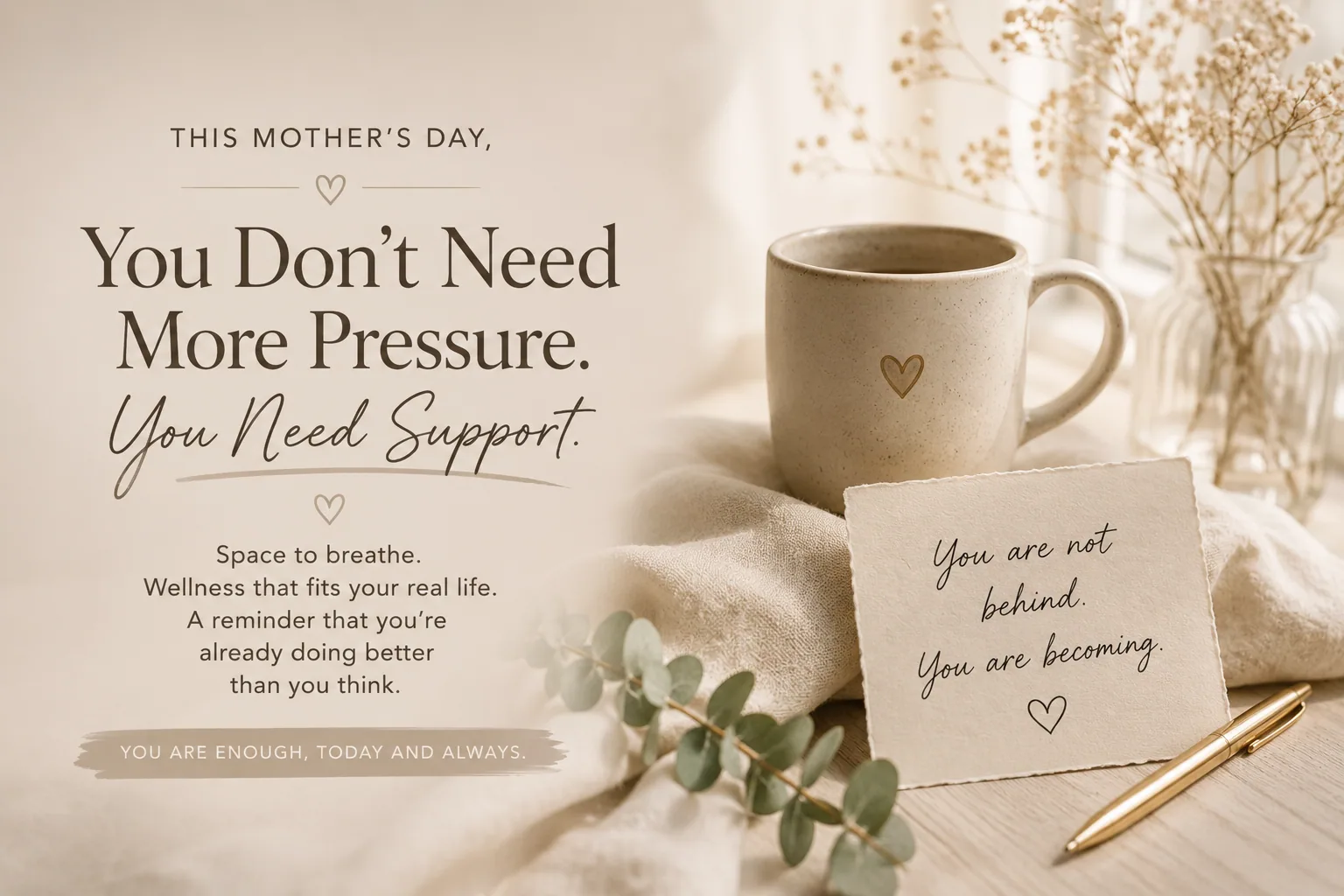
Because moms don’t need more pressure.
They need space to breathe. Support that feels realistic. And wellness that actually honors the life they’re living. 🌿
Share this article
Help someone else find this post
Share it to your favorite platform, email it directly, or copy the link for your next post or message.
Maxson Wellness offer
Rebuild strength from the inside out
Get practical workouts, sustainable nutrition guidance, mindset support, and real-life strategies to help you rebuild confidence, self-trust, and strength without perfection.
- Realistic strength and workout guidance
- Sustainable nutrition and macro support
- Mindset tools to rebuild self-trust
- Postpartum and real-life transformation support
- One clear next step after every post
Reader reflection
What is one thing you can do this week to rebuild strength, confidence, or self-trust in your real life?
Choose one next step you can actually follow through on this week. Keep it simple, realistic, and rooted in momentum.
Public reading stays open. Private reflection requires a member account so you can save your thinking and come back to it later.